
• Gum arabic or gum
tragacanth (binder)
• Distilled water
• Pigment
• Chalk or kaolin/China clay (filler)
Step 1: Dissolve the binder in the water in the ratio 1:20 (one part binder to 20 parts water).
Step 2: Mix filler and pigment in the ratio 2:1 (two parts filler to one part pigment).
Step 3: Add the binder liquid to the filler/pigment slowly, until it has the consistency of dough or putty.
Step 4: Roll out and dry as described above.


• Distilled water
• Pigment
• Chalk or kaolin/China clay (filler)
Step 1: Dissolve the binder in the water in the ratio 1:20 (one part binder to 20 parts water).
Step 2: Mix filler and pigment in the ratio 2:1 (two parts filler to one part pigment).
Step 3: Add the binder liquid to the filler/pigment slowly, until it has the consistency of dough or putty.
Step 4: Roll out and dry as described above.
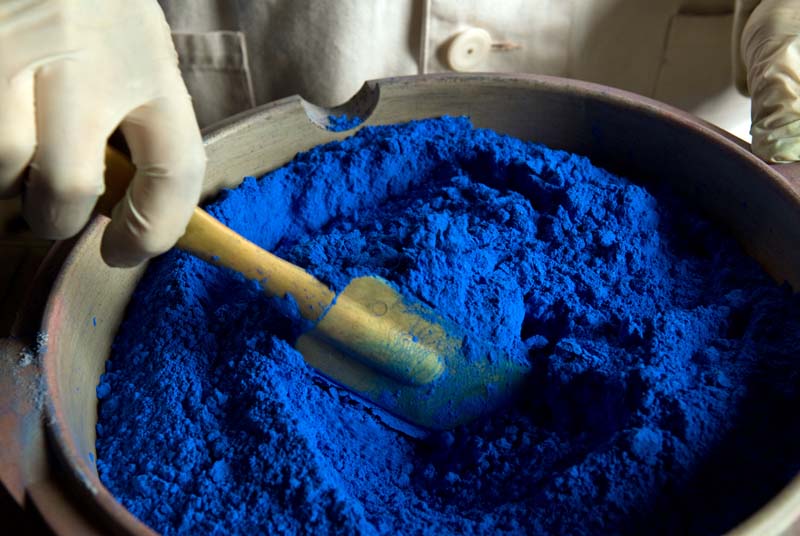
Pastel is essentially pure pigment. (Wilfried Louvet)
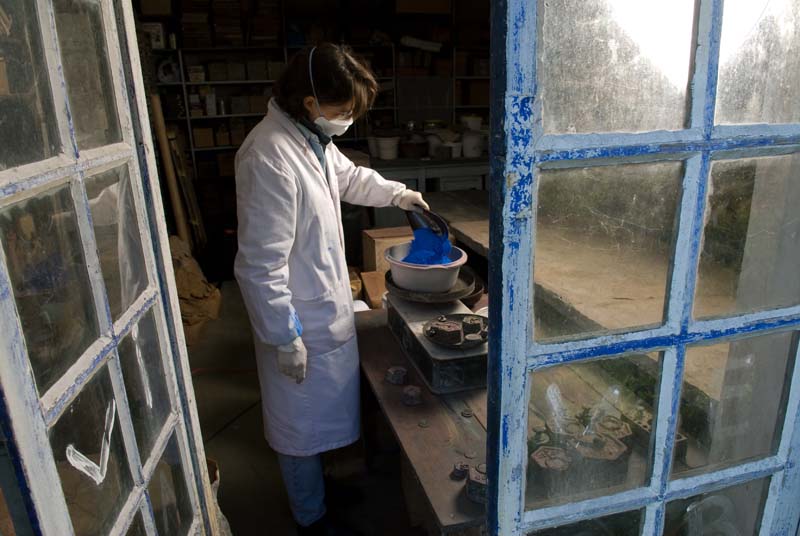
Pigments are weighed on an old balance. (Wilfried Louvet)
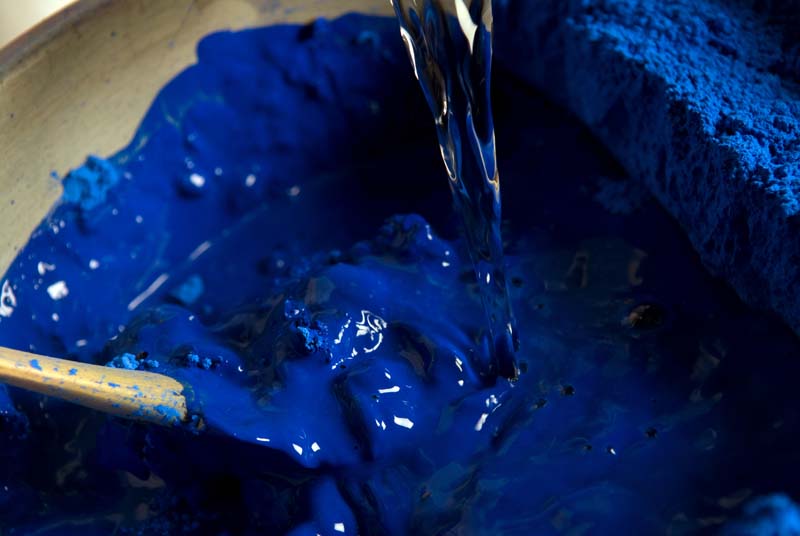
The pigment is then wet… (Wilfried Louvet)
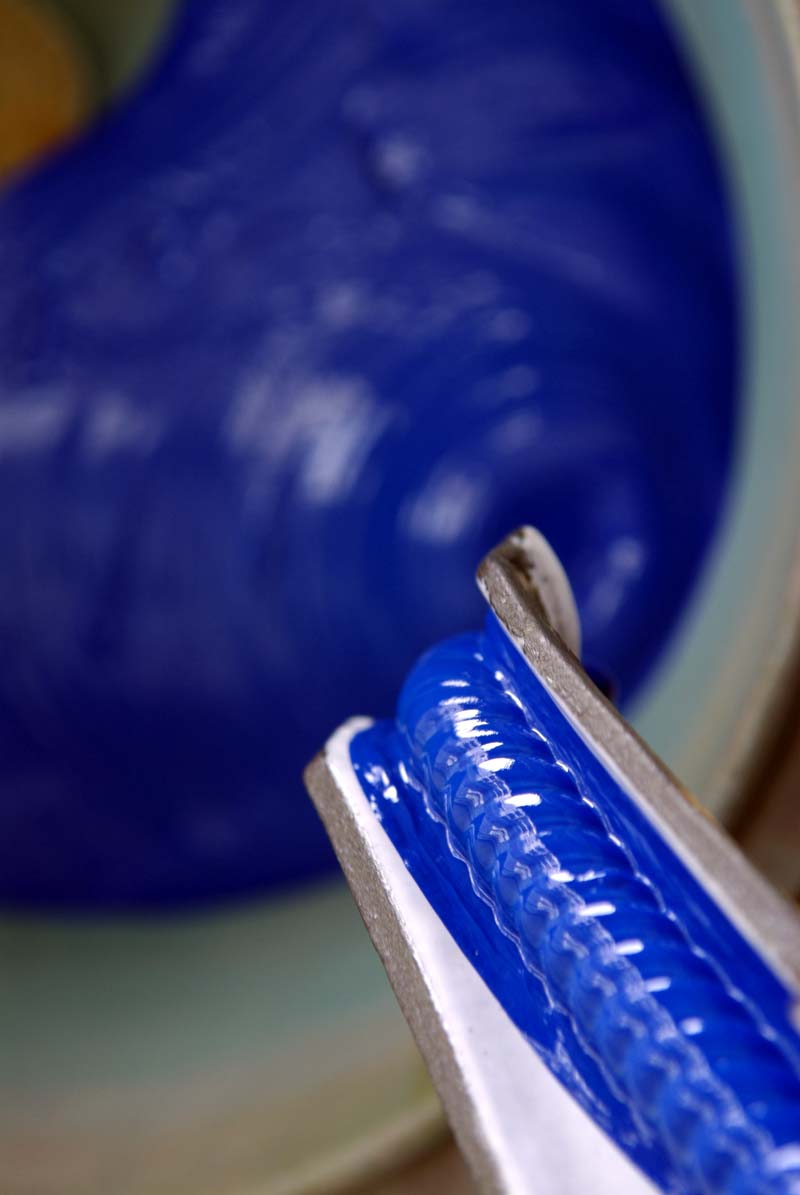
…and ground together. (Wilfried Louvet)
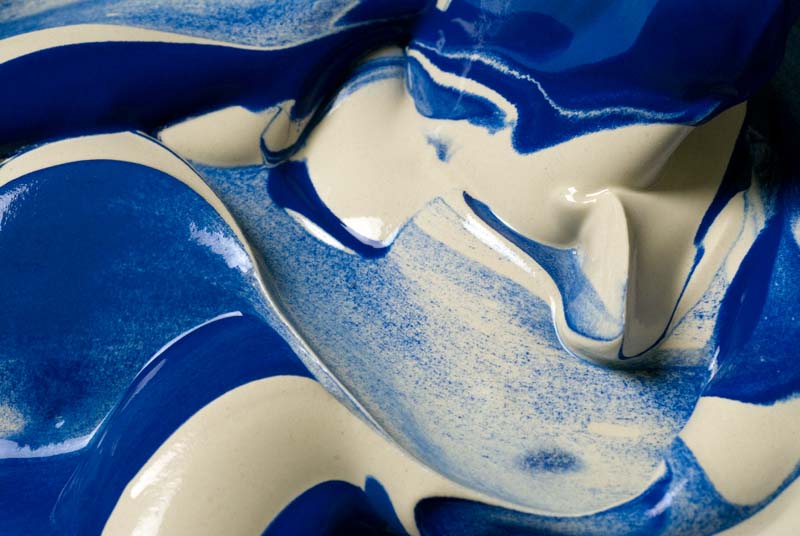
Fluid colors are blended… (Wilfried Louvet)
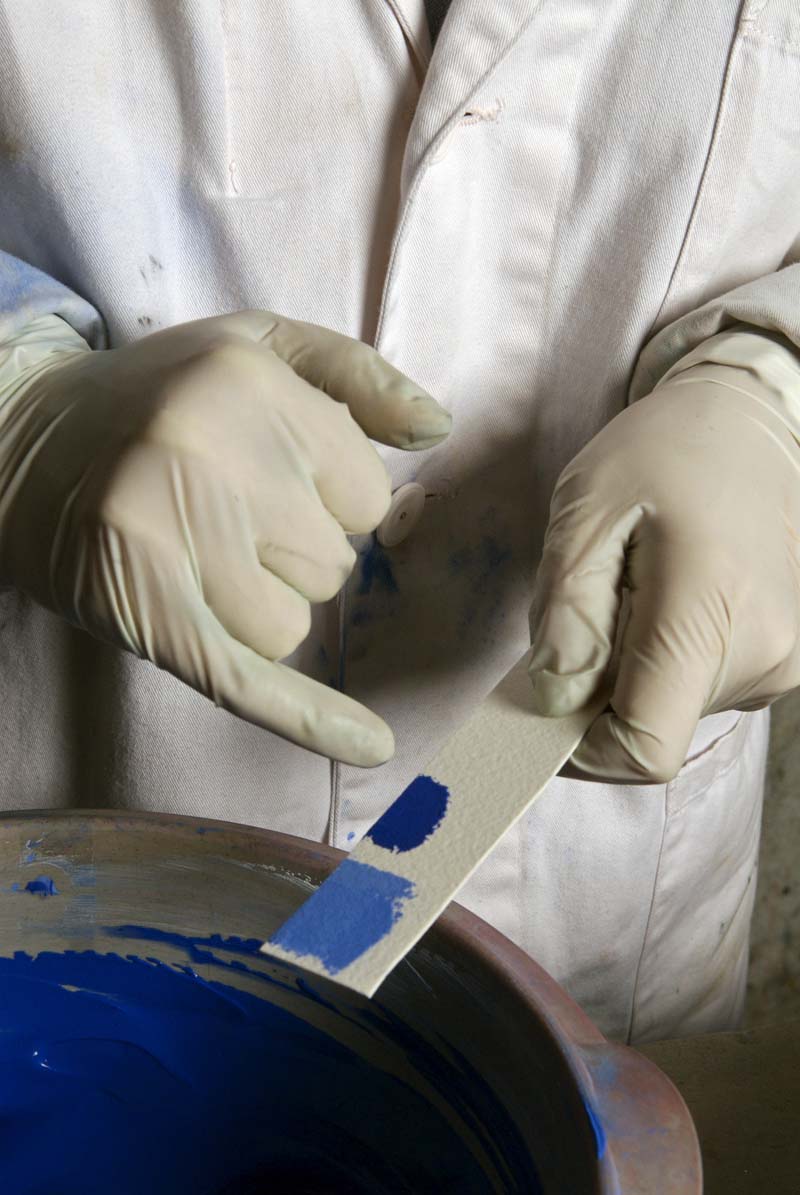
…to make gradations. (Wilfried Louvet)
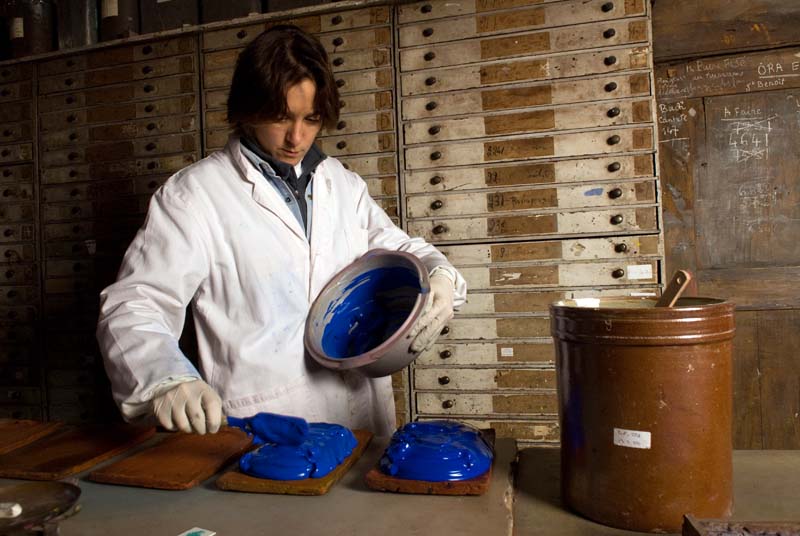
The paste is placed on tiles to rest. (Wilfried Louvet)
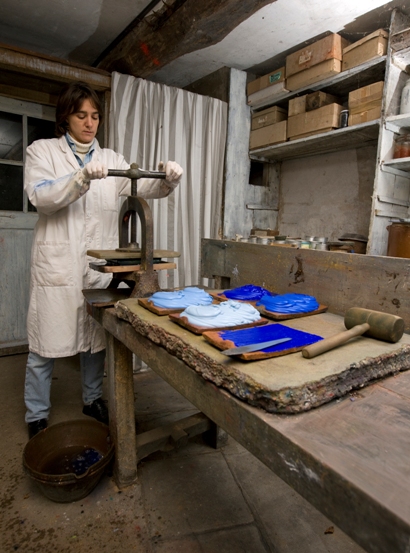
The water is pressed out of the paste… (Jacky Naegelen)
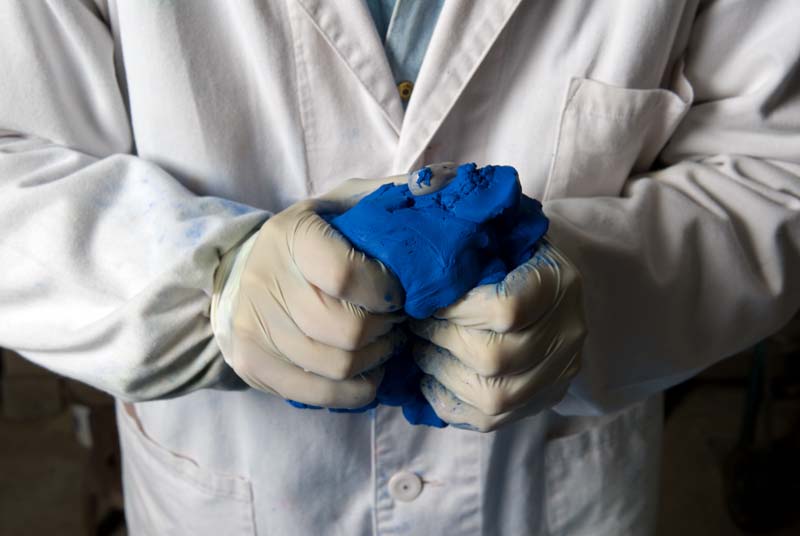
…and the paste is kneaded into a good consistency. (Wilfried Louvet)
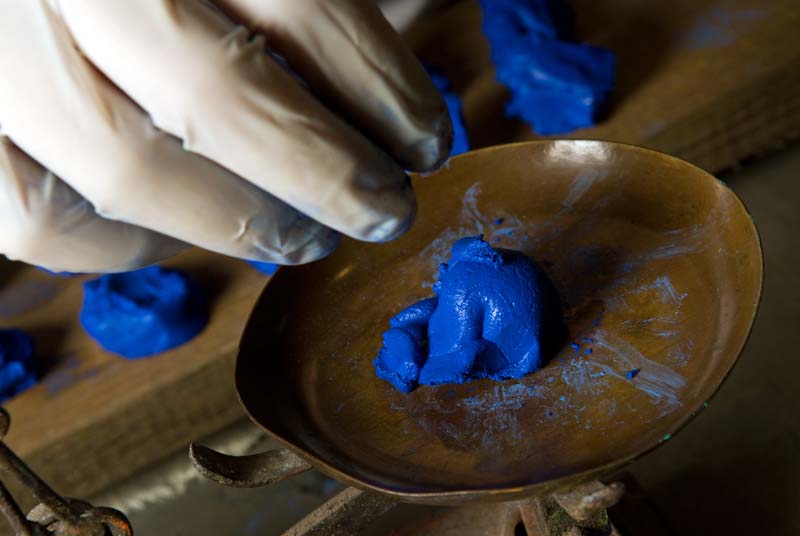
Quantities are weighed, (Wilfried Louvet)
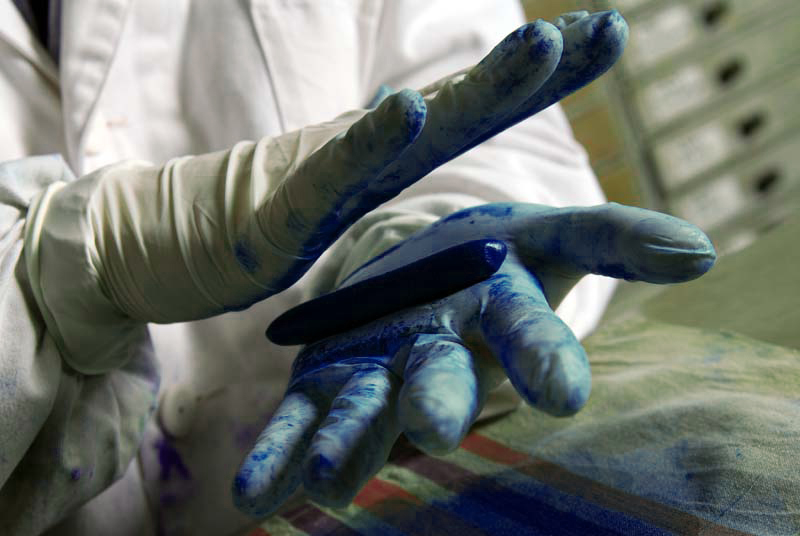
then rolled by hand… (Wilfried Louvet)
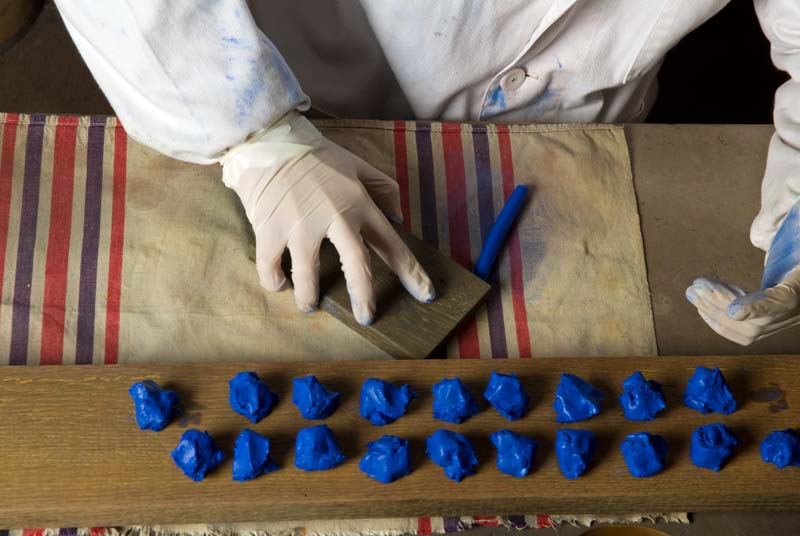
…into sticks. (Wilfried Louvet)
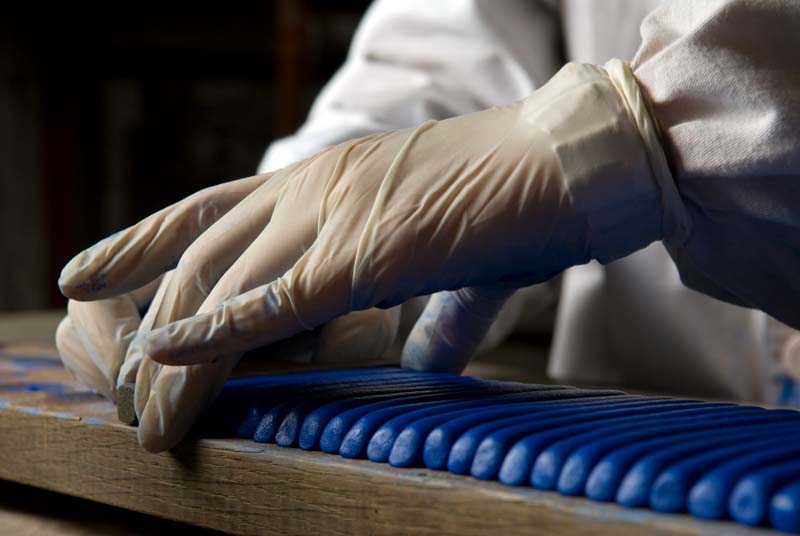
The sticks are lined up on a plank… (Wilfried Louvet)
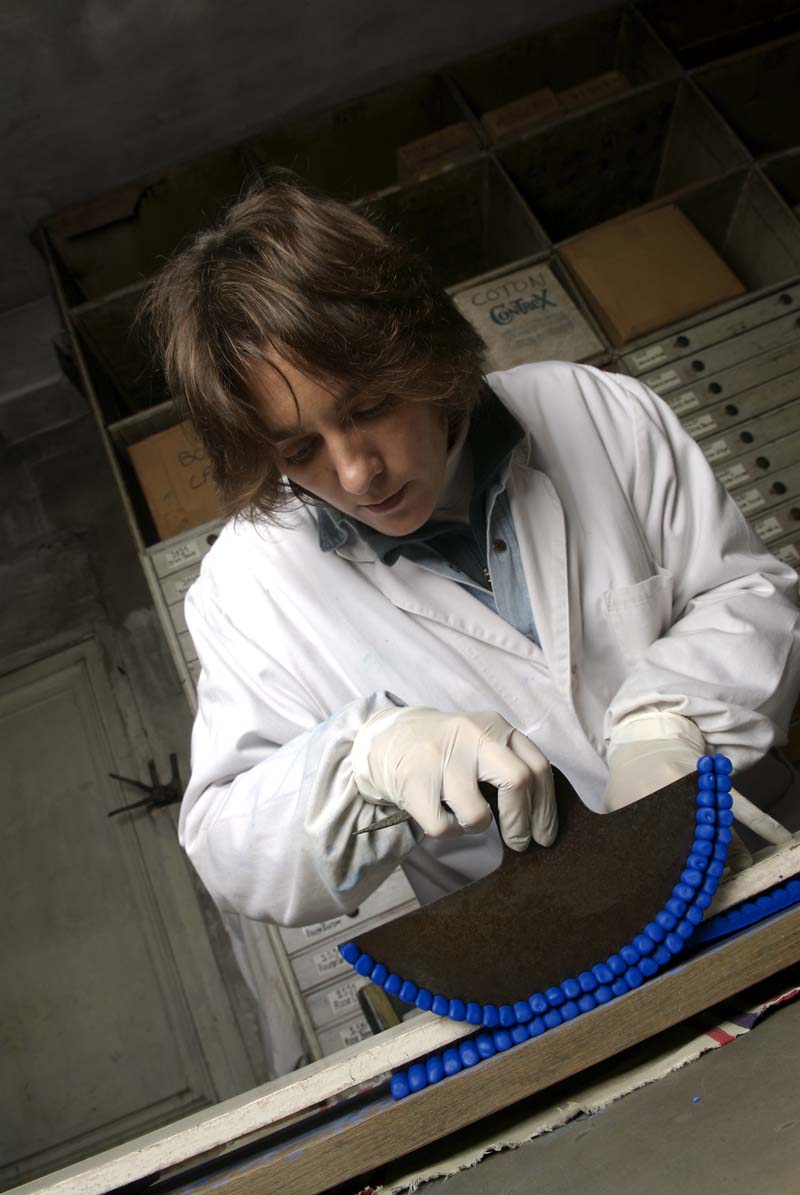
…and cut to length. (Wilfried Louvet)
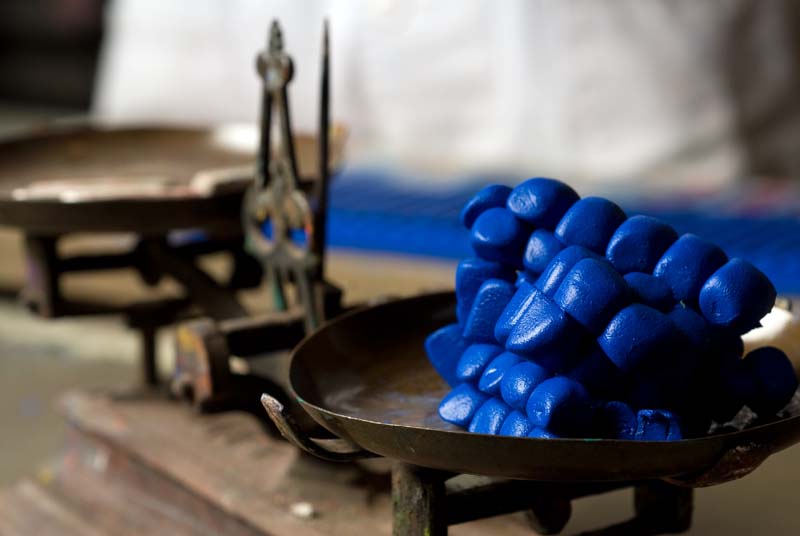
Nothing is wasted. (Wilfried Louvet)
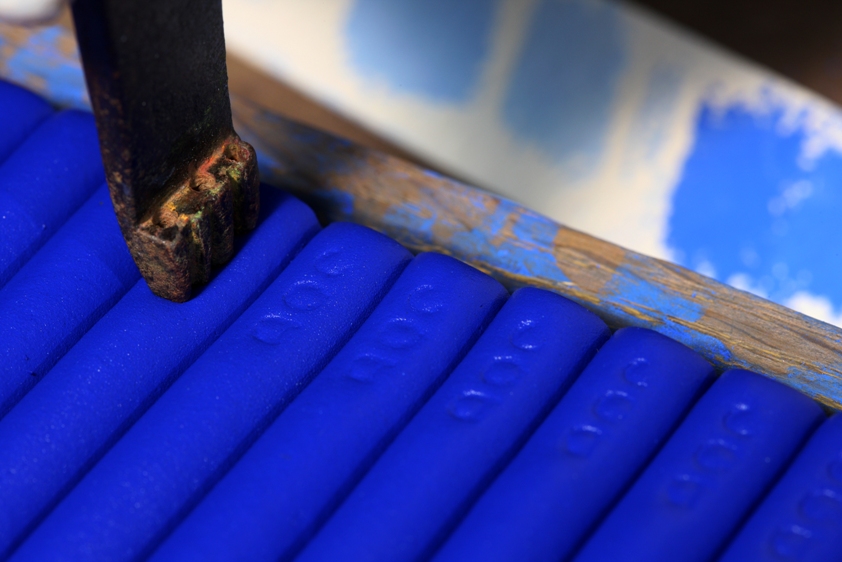
Each stick is stamped with the signature “ROC”. (Jacky Naegelen)
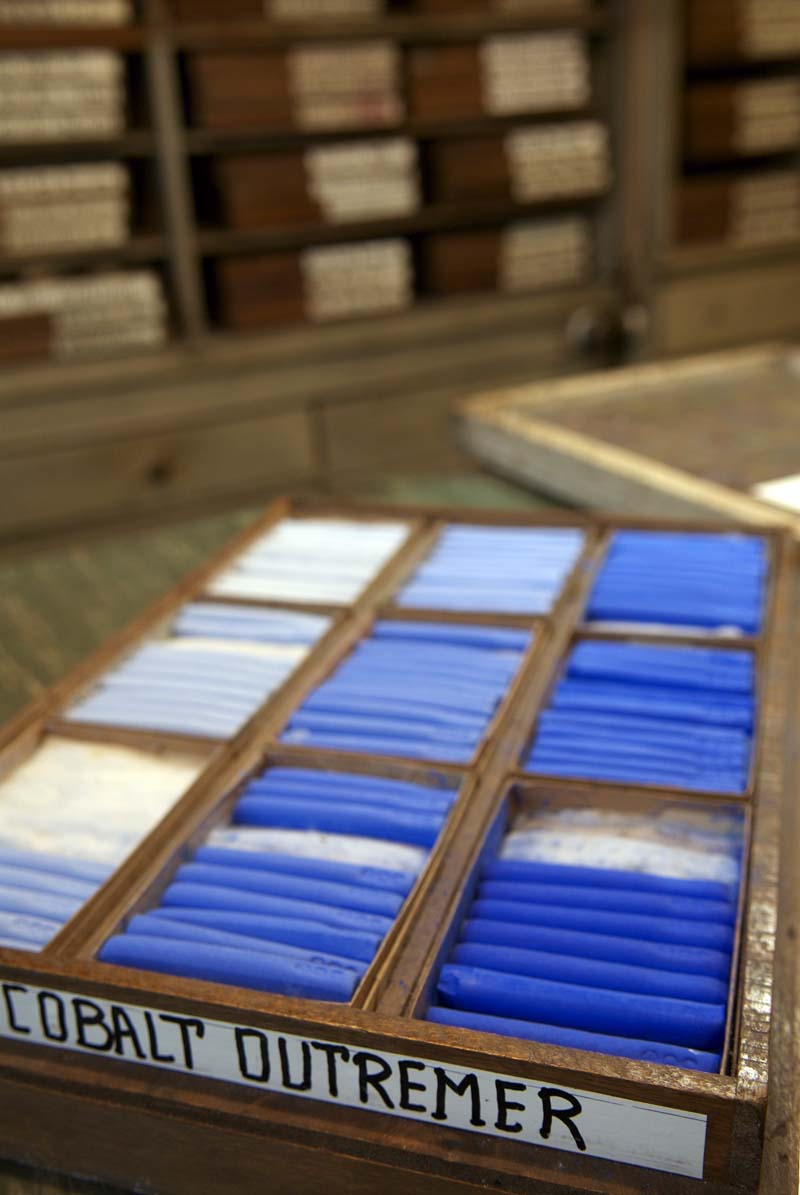
Sticks can be selected individually… (Wilfried Louvet)

Δεν υπάρχουν σχόλια:
Δημοσίευση σχολίου